


Key Takeaways
- Bad breath can be caused by bacteria, trapped food, plaque, gum disease, dry mouth, dental infections, sinus drainage, acid reflux, certain medications, or sleep apnea.
- Persistent bad breath is usually a symptom, not the problem itself.
- Understanding the cause is the first step toward lasting improvement.
- At Northwest Dental Centre, we use a guided discovery approach to help you understand what’s happening and create a plan that supports your long-term oral health.
You brush your teeth. You floss. You use mouthwash. Yet a few hours later, the unpleasant taste or odour returns. For many people, bad breath isn’t simply a hygiene problem. It’s often your mouth’s way of telling you that something else deserves attention. At Northwest Dental Centre, we believe the goal isn’t simply fresher breath. It’s helping you discover why it’s happening so together we can address the underlying cause rather than continually masking the symptom.
Everyday Causes of Bad Breath
Food & Drink
Foods such as garlic, onions, coffee, and alcohol can temporarily affect your breath. Small food particles trapped around teeth also allow bacteria to produce unpleasant odours. If bad breath keeps returning despite good daily care, it’s worth looking deeper.
Dry Mouth & Daily Habits
Healthy saliva naturally rinses away bacteria. Dehydration, medications, mouth breathing, tobacco use, and aging can reduce saliva flow and contribute to bad breath. We help determine which daily habits are actually influencing your oral health.
Oral Health Causes of Bad Breath
Teeth & Gum Health
Inflamed gums, plaque, cavities, cracked teeth, and dental infections can all contribute to persistent bad breath. Often, bad breath is one of the earliest signs that something isn’t healthy, even before pain develops.
Crowns, Bridges & Dental Restorations
Existing dental work can sometimes trap food or bacteria if it no longer fits ideally. We evaluate both your natural teeth and your restorations.
Health Conditions That May Affect Your Breath
Sinus drainage, acid reflux, diabetes, certain medications, and tonsil stones may all contribute to bad breath. Understanding your overall health helps identify the most likely cause.
Sleep Apnea & Night-Time Dry Mouth
Mouth breathing during sleep, snoring, sleep apnea, and CPAP therapy may contribute to dry mouth and persistent morning breath. We routinely consider breathing, saliva flow, and oral health together.
When You Should See a Dentist
Signs That Call for a Dental Visit
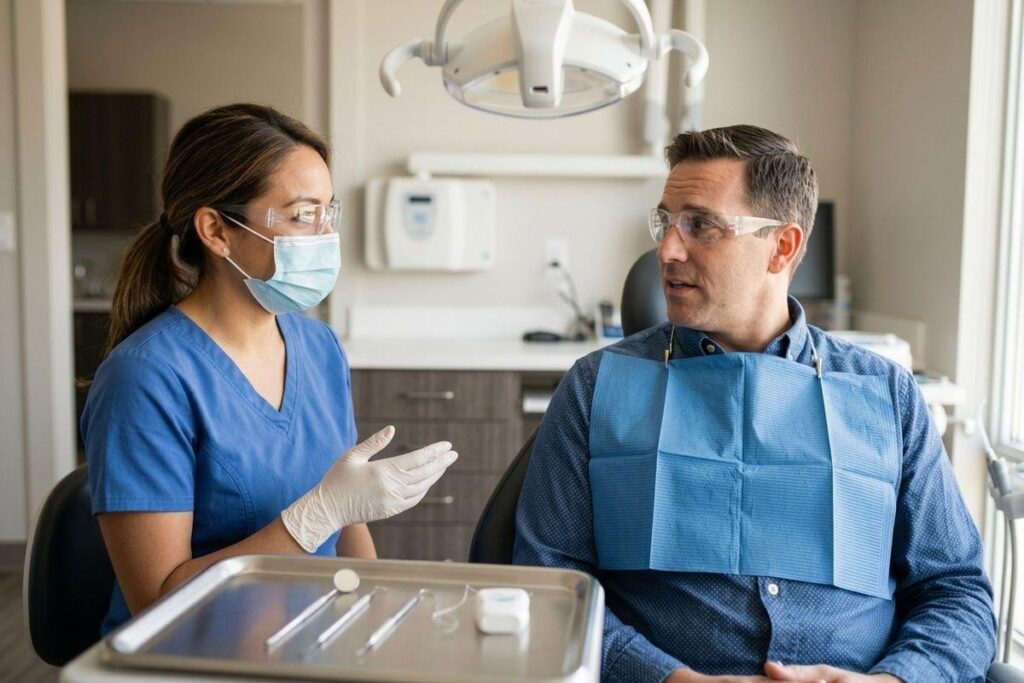
If bad breath continues despite brushing, flossing, tongue cleaning, and hydration, or if you notice bleeding gums, tooth pain, persistent dry mouth, or a recurring bad taste, it’s time for an assessment.
What Your Dental Visit May Cover
We use a guided discovery approach. Using photographs, digital imaging, and a thorough examination, we help you understand what we’re seeing and why it matters.
How In-House Dental Care Can Help You
Care Options Under One Roof
Once we understand the cause, we recommend care that fits your long-term oral health. This may include a professional cleaning, gum therapy, repairing a cavity or restoration, improving home care, managing dry mouth, or assessing sleep-related concerns.
Many professional cleanings at Northwest Dental Centre are performed using Guided Biofilm Therapy (GBT). GBT is a gentle, modern approach that uses warm water, air, and a very fine cleansing powder to remove the sticky bacterial biofilm that collects on your teeth, gums, implants, and dental work.
Instead of simply scraping away hardened deposits, GBT helps us clearly see and remove harmful biofilm in a comfortable, thorough, and minimally invasive way. Many patients find it more comfortable than traditional cleanings, while helping support healthier gums and fresher breath.
Daily Steps for Fresher Breath
Brush twice daily, clean your tongue, floss around every tooth and restoration, clean retainers as directed, stay hydrated, and follow the care plan developed with your dental team.
Our Philosophy
Bad breath is rarely the problem itself. It’s usually a symptom. Our role isn’t simply to make the odour disappear today. It’s to help you discover what’s causing it, understand how your mouth works, and build habits that support your oral health for years to come. That’s the philosophy behind Dental Longevity: preserve what is healthy, strengthen what is vulnerable, and help people enjoy a healthier mouth for life.
If bad breath keeps coming back, book an assessment with Northwest Dental Centre so our team can help you understand the cause and plan your next steps.